The initiative
Climate Champions School Clubs Initiative
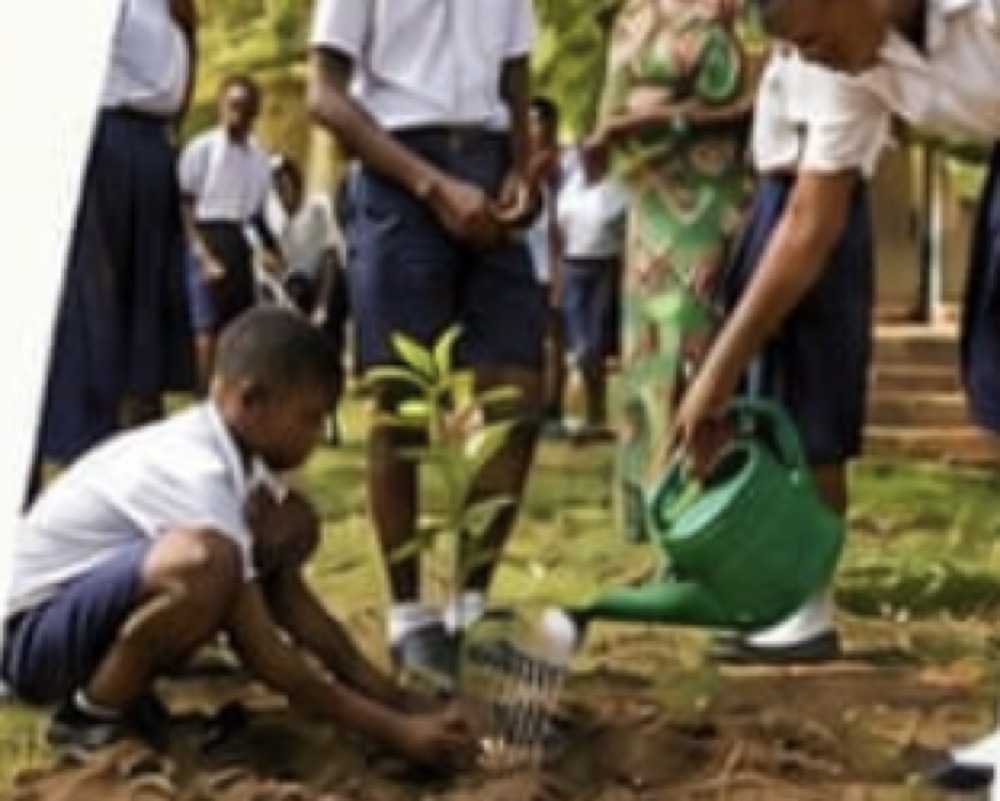
CCSCI is a school-based climate literacy and action programme for children aged 9–15 in Ghana. It does not stop at classroom awareness — pupils plant and nurture trees, run waste and water campaigns, grow gardens, monitor what they plant, and lead environmental action in their schools and communities.
What it is
An education-to-action model, run through school clubs
Every participating school sets up a Climate Champions Club. In the club, pupils learn global and local climate facts, look at what is happening in their own community, and then take on practical projects that improve their school environment.
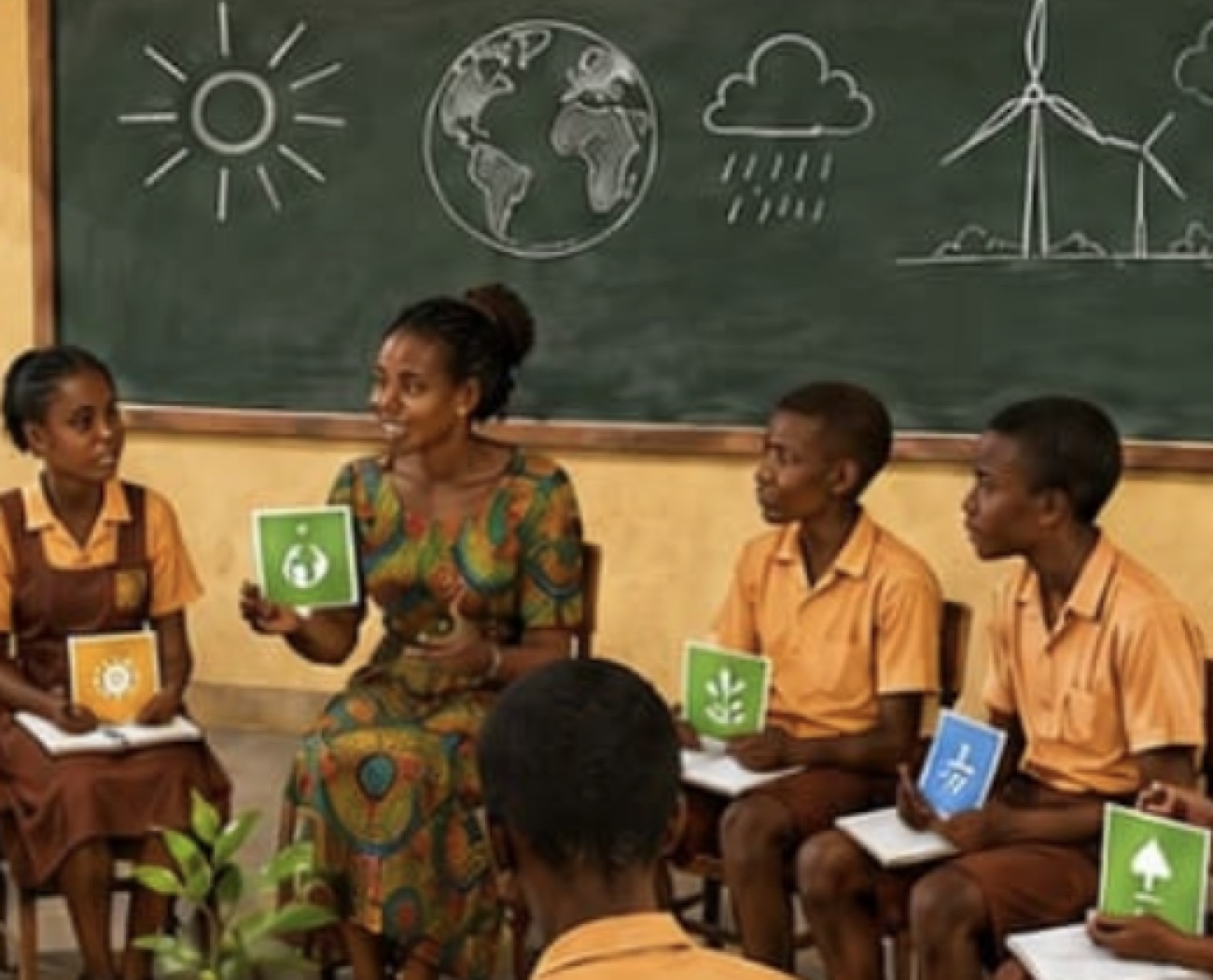
The learning is deliberately child-friendly. Global ideas are translated into everyday Ghanaian examples — the rains that arrive late, the drain that floods, the market waste, the thinning shade — and taught through stories, songs, picture cards, drama, games, field observation and demonstrations that work for mixed literacy levels.
The clubs are then asked to show their work. Trees are mapped and checked, activities are logged, and each club keeps a simple scorecard that tells its school, its district and its supporters what actually happened.
50
Schools
Basic schools across 5 pilot districts in Ghana
24
Months
Pilot design, roll-out, monitoring and learning
9–15
Ages
Upper primary and junior high school pupils
Scalable
Model
Built from day one to replicate district by district
Who it serves
Children aged 9–15, and the adults around them
CCSCI works with pupils at upper primary and junior high school level — the age at which values, habits and civic responsibility take shape.
Pupils
Club members aged 9–15, with deliberate inclusion of girls, children with disabilities, children from low-income households and schools in climate-vulnerable communities.
Teachers and schools
Teacher patrons and headteachers receive facilitation training, simple guides and club management support — designed to add value without adding a heavy workload.
Communities
Parents, PTAs, school management committees, traditional leaders and local volunteers support tree care, events and safety — and receive the climate messages pupils carry home.
Schools are chosen, not volunteered. Selection looks at climate vulnerability and environmental need, school readiness and a willing teacher patron, space for planting or a garden, community commitment to protect what is planted, and district support. The initiative deliberately avoids elite-only participation.
How a club works
Four things every club has
The structure is simple on purpose. It has to survive a busy school term without a project officer standing in the room.
A teacher patron
One trained teacher guides the club, supervises activities, keeps records and looks after safeguarding.
A student executive
Pupils elect a president, secretary, organiser, inclusion lead and media lead, with gender balance encouraged.
Action teams
Small teams take on tree care, waste and recycling, water and sanitation, biodiversity, energy and drama or media.
A regular rhythm
Learning sessions through the term, a monthly practical action day, and a school or community climate event each term.
Term 1
Set up and look around
- Club launch and student elections
- Introduction to climate and the SDGs
- School environmental audit
- Climate action plan for the year
Term 2
Act and plant
- Climate impacts here in Ghana
- Waste, water and energy activities
- Tree planting and geo-tagging
- Household climate pledge campaign
Term 3
Check, show and celebrate
- Tree survival checks and register updates
- School climate exhibition
- Drama and debate competition
- Awards and next year's plan
Programme pillars
What clubs learn and do
Climate Literacy
Weather, climate and the SDGs explained through stories, songs, picture cards and examples children can see in their own community.
Tree Stewardship
Clubs plant indigenous and fruit trees, then water, mulch, protect and check on them — success is measured by survival, not seedlings handed out.
Water & Sanitation
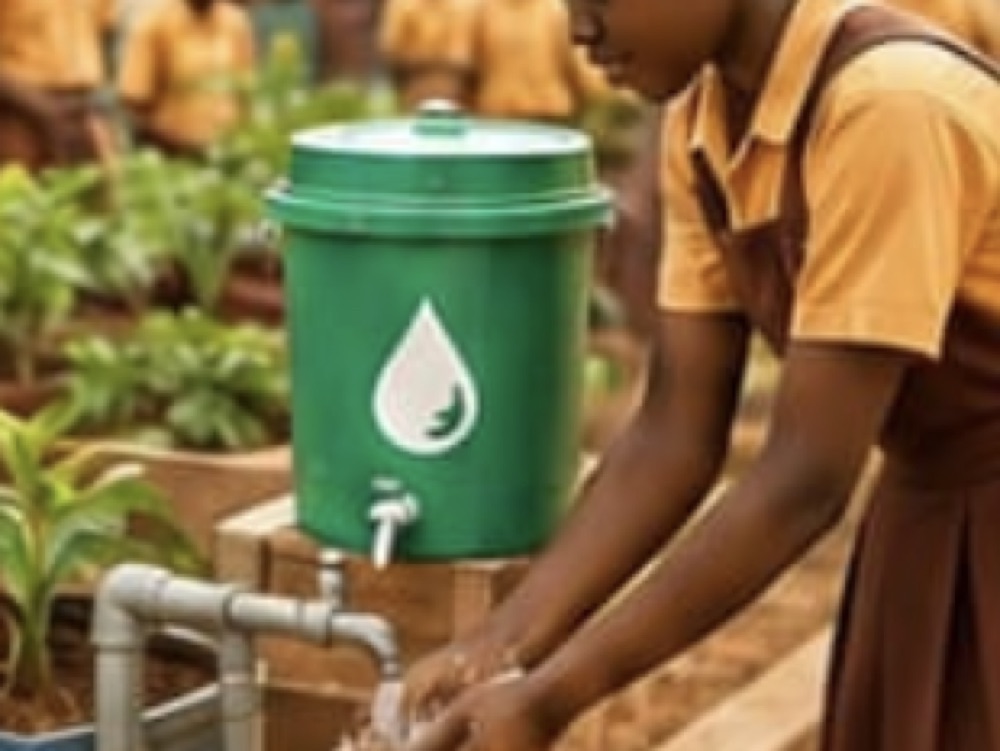
Handwashing, safe water, drainage and water-saving habits that keep pupils healthy and schools resilient during floods and dry spells.
Waste & Recycling
Sorting, reusing, composting and school clean-up days that turn everyday waste into a practical lesson in circular thinking.
School Gardens
Hands-on plots where pupils learn about soil, seasons, food and biodiversity — and see climate ideas grow in front of them.
Digital Monitoring
Every club tree is geo-tagged and photographed, so schools, districts and partners can follow survival and care over time.
Student Leadership
Elected club executives run meetings, mentor younger pupils, speak at assemblies and carry climate messages home to their families.
Student activities
What pupils actually spend their time doing
Plant and care for trees
Pupils choose suitable species, plant them on the school compound or in the community, and take turns watering, mulching and protecting each tree.
Run a school environmental audit
Club members walk their school to map drainage, litter, tree cover, water points and shade — then build an action plan around what they find.
Keep a weather diary
Simple daily observations of rain, heat, cloud and season teach the difference between weather and climate using local evidence.
Lead waste and water campaigns
Sorting stations, clean-up days, composting and water-saving pledges give every pupil something concrete to change.
Grow a school garden
Beds, nurseries and compost heaps connect climate learning to soil, food and the farming seasons families already know.
Speak up as climate leaders
Drama, debate, songs, assembly talks and household climate pledges carry the message from the club to homes and community durbars.
Tree stewardship & digital monitoring
Trees that are counted twice: once when planted, again when they survive
School tree planting has a well-known weakness — nobody comes back. CCSCI is built around the follow-up.
- Each tree gets an identity: species, planting date, location point and a photograph.
- A class or action team is named as its custodian, with a watering and protection routine.
- Survival is checked at six and twelve months and the record is updated honestly.
- Club scorecards reward survival, participation, inclusion, data quality and outreach.
Monitoring records trees and school activity — not personal information about children. Any photograph involving pupils is published only with consent.

Why practical action matters
A child who has done something remembers it
Many pupils can already recite environmental messages. Far fewer have had a structured chance to lead a project, keep a record, report a result or persuade an adult. Practical action closes that gap — and it is what turns knowledge into habit.
It also produces evidence. A club that has planted, mapped, checked and reported gives its school, its district and its supporters something real to look at, rather than an attendance figure from a one-day event.
And it spreads. Pupils take handwashing, waste sorting, water saving and tree care home. Households change quietly, long before anyone runs a campaign about it.
SDG alignment
Four goals, one school club
- 4Quality Education
Practical, age-appropriate climate and sustainability learning inside the school day.
- 13Climate Action
Children learn the causes and local impacts of climate change and act on them.
- 15Life on Land
Tree planting, tree survival, soil care and school biodiversity stewardship.
- 17Partnerships
Schools, districts, communities, donors and CSR partners working as one delivery team.
Partner with AgNova
Sponsor a school. Equip a club. Grow climate action in Ghana.
AgNova is seeking donors, foundations, CSR partners, schools, community organisations and diaspora supporters who want to see climate learning turn into visible action on the ground.
AgNova is committed to child-safe, inclusive, and community-centered environmental action.